

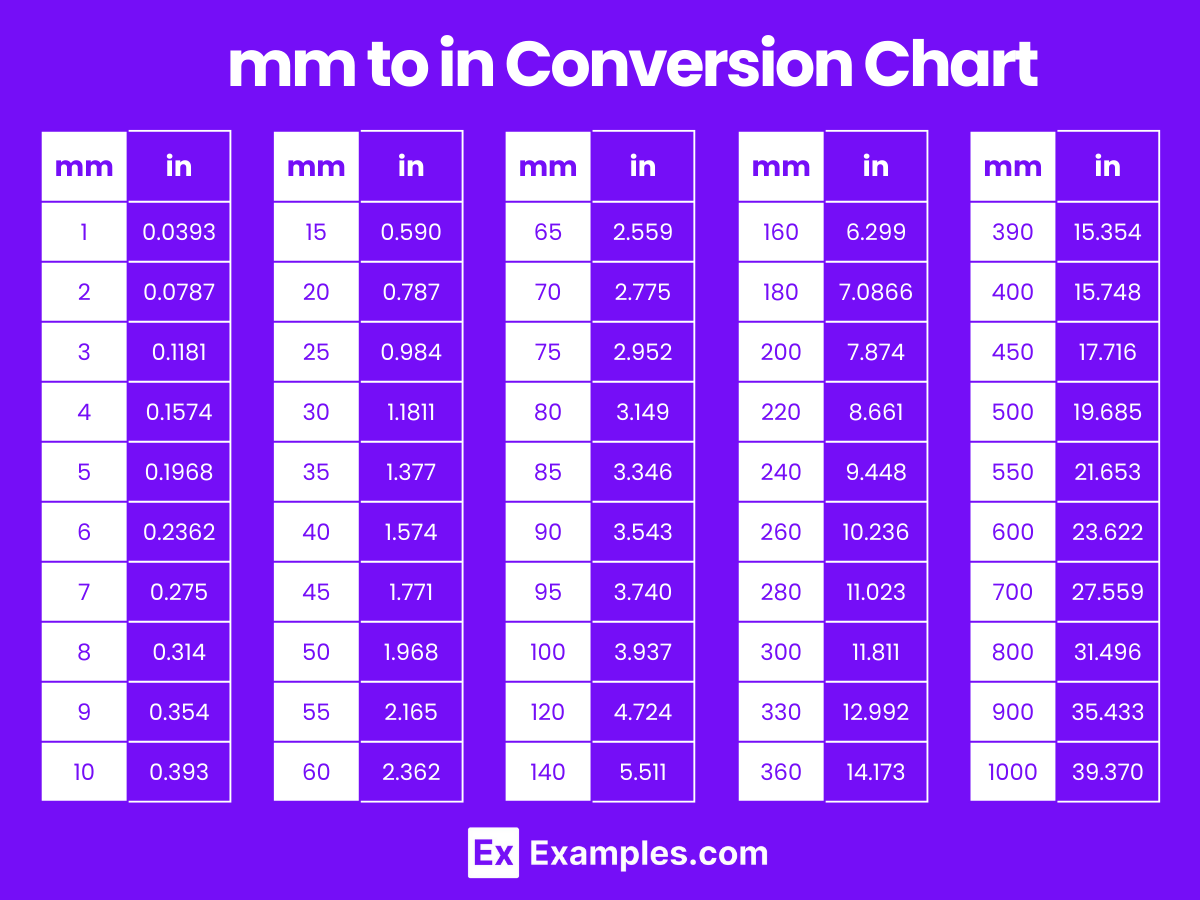
Introduction: Why Understanding MM to Inches Matters
In a world where measurements vary between countries and industries, knowing how to convert millimeters (mm) to inches is essential. Whether you’re an engineer, DIY enthusiast, crafter, or student, this guide will give you everything you need to master mm to inches conversions.
This 2,500-word guide covers:
✅ The exact mm to inches conversion formula
✅ Printable conversion chart (mm to inches & fractions)
✅ Real-world applications in different fields
✅ Tools & tricks for quick mental math
✅ Historical context of both measurement systems
By the end, you’ll be able to switch between metric and imperial units effortlessly.
The Basic Conversion: How Many Inches Are in a Millimeter?
The Official Conversion Factor
1 millimeter (mm) = 0.0393701 inches (exact)
1 inch = 25.4 millimeters (exact)
This means:
- To convert mm to inches: Multiply mm by 0.03937 (or divide by 25.4)
- To convert inches to mm: Multiply inches by 25.4
Quick Calculation Examples
| Millimeters (mm) | Inches (Decimal) |
|---|---|
| 1 mm | 0.0394″ |
| 5 mm | 0.1969″ |
| 10 mm | 0.3937″ |
| 25 mm | 0.9843″ |
| 50 mm | 1.9685″ |
| 100 mm | 3.9370″ |
MM to Inches Conversion Chart (With Fractions)
For those who prefer fractional inches, here’s a handy reference:
| Millimeters (mm) | Inches (Decimal) | Nearest Fractional Inch |
|---|---|---|
| 1 mm | 0.0394″ | 1/25″ |
| 2 mm | 0.0787″ | 5/64″ |
| 3 mm | 0.1181″ | 1/8″ |
| 5 mm | 0.1969″ | 13/64″ |
| 10 mm | 0.3937″ | 25/64″ |
| 15 mm | 0.5906″ | 19/32″ |
| 20 mm | 0.7874″ | 25/32″ |
| 30 mm | 1.1811″ | 1 3/16″ |
[ Download Full PDF Chart Here]
Why Two Systems Exist: Metric vs. Imperial
History of Millimeters (Metric System)
- Developed during the French Revolution (1790s)
- Based on decimal units (powers of 10)
- Used by 95% of the world today
History of Inches (Imperial System)
- Originated from ancient Roman measurements
- Standardized in the British Empire
- Still used primarily in the USA, Liberia, and Myanmar
Real-World Applications of MM to Inches Conversions
Common Fields That Require Both Units
- Engineering & Manufacturing
- Machines often mix metric bolts and imperial frames
- Construction
- US builders use inches for lumber, but mm for plumbing
- Jewelry Making
- Gemstones measured in mm, settings in inches
- 3D Printing
- Designs often in mm, but material specs in inches
Everyday Examples
- Phone screens: 6.1″ = 154.94 mm
- Drill bits: 1/8″ = 3.175 mm
- Camera lenses: 50 mm = 1.9685″
Tools for Instant MM to Inches Conversion
Physical Measuring Tools
- Dual-scale rulers (shows both mm and inches)
- Digital calipers with unit switch
- Architect’s scale rulers
Digital Converters
- Google: Type “10 mm in inches”
- Smartphone apps: Unit Converter, ConvertPad
- Voice assistants: “Hey Siri, convert 45 mm to inches”
Pro Tips for Quick Mental Math
Easy Approximations
- “25 mm ≈ 1 inch” (Close enough for quick estimates)
- Divide mm by 25, then add 1.5% for better accuracy
Fraction Shortcuts
- 3 mm ≈ 1/8″
- 6 mm ≈ 1/4″
- 12 mm ≈ 1/2″
Visual References
- A US dime is ~1 mm thick
- A standard pencil is ~7 mm wide
FAQ: Your Top MM to Inches Questions
How many mm is 1/2 inch?
12.7 mm (25.4 × 0.5)
Is 20 mm equal to 1 inch?
No, 20 mm = 0.7874″ (about 25/32″)
Why is 25.4 mm exactly 1 inch?
Set by the 1959 International Yard and Pound Agreement
What’s bigger – 10 mm or 1/2 inch?
1/2″ (12.7 mm) is larger
Free Printable Resources
[ Download Here]
- Wall poster (mm to inches & fractions)
- Pocket conversion wheel
- Workshop cheat sheet
Conclusion: Mastering Both Measurement Systems
While most countries use metric (mm), understanding inches remains crucial in many industries. With this guide’s formulas, charts, and tricks, you’ll convert units like a pro!