

VAR controversy FIFA matches have become one of the most debated topics in modern football. What was introduced as a solution to human error has, in many ways, created a new kind of drama—one that unfolds in slow motion, on giant screens, and across millions of social media timelines.
If you’ve watched a major tournament in recent years, chances are you’ve felt that tense pause when a referee presses a finger to their earpiece. The stadium quiets. Players freeze. Fans hold their breath. And in that silence, football feels different.
This article explores why VAR remains so divisive, how it works in FIFA competitions, and whether it has truly improved fairness—or simply shifted the controversy.
Table of Contents
ToggleThe Birth of VAR in FIFA Competitions
The Video Assistant Referee system was officially introduced at the highest level during the 2018 FIFA World Cup in Russia. FIFA presented it as a technological breakthrough aimed at eliminating clear and obvious errors in four key areas: goals, penalties, red cards, and mistaken identity.
Before VAR, referees relied solely on their view and the linesmen. Even with their experience, mistakes were inevitable. Goals scored from offside positions or unpunished fouls in the box often changed the course of tournaments.
FIFA’s intention was simple. Protect the integrity of the game. Increase accuracy. Restore fairness.
But as the world quickly discovered, the reality of VAR controversy FIFA matches would be far more complex.
How VAR Actually Works on the Field
To understand the debate, it’s important to understand the process.
In FIFA matches, a team of video officials monitors multiple camera angles from a centralized operation room. When a potential error occurs, the VAR team communicates with the on-field referee through a headset.
The referee can either accept the recommendation or review the footage on a pitch-side monitor. Only then is a final decision made.
In theory, this collaboration reduces clear mistakes. In practice, interpretation still plays a huge role. And interpretation is where most VAR controversy FIFA matches begin.
A handball might look accidental from one angle but deliberate from another. An offside might be decided by millimeters. Technology may be precise, but the human element remains.
VAR Controversy FIFA Matches: The 2018 World Cup Turning Point
The 2018 World Cup was historic for VAR implementation, but it also sparked immediate debate.
One of the earliest flashpoints came during France vs Australia. A penalty was awarded to France after a video review showed a late challenge in the box. The decision was technically correct, yet fans questioned whether the foul was clear enough to justify intervention.
Moments like these highlighted a new dilemma. Was football becoming too forensic?
Supporters argued justice had been served. Critics believed the spontaneity of the game was being sacrificed. This clash of perspectives fueled ongoing VAR controversy FIFA matches discussions across media platforms worldwide.
Millimeter Offsides and the Technology Debate
One of the most frustrating aspects for fans has been ultra-tight offside decisions.
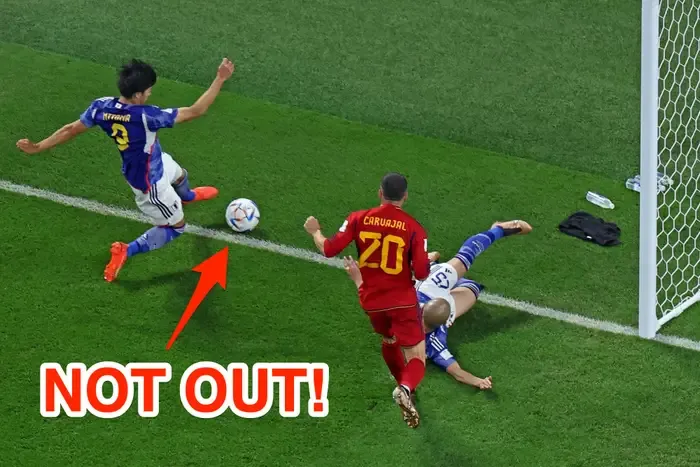
Advanced tracking systems now draw digital lines across players’ shoulders, knees, and boots. Goals have been disallowed because a striker’s arm was marginally ahead of a defender’s foot.
From a technical standpoint, the calls are accurate. Yet emotionally, they feel harsh. Football was once judged by visible advantage, not microscopic measurements.
This shift has intensified debates around VAR controversy FIFA matches, particularly during knockout stages where a single goal determines destiny.
Handball Chaos and Changing Interpretations
If offside rulings spark frustration, handball decisions ignite outrage.
FIFA has updated handball interpretations several times since VAR’s introduction. Natural position. Unnatural silhouette. Deflection distance. Each season brings subtle refinements.
During international tournaments, these rule adjustments sometimes confuse even experienced commentators. A handball given in one match may not be given in another.
The inconsistency feeds into the perception that VAR controversy FIFA matches are less about technology and more about interpretation.
The irony is striking. VAR was introduced to create clarity. Instead, rule changes combined with slow-motion replays often amplify uncertainty.
Emotional Impact on Players and Fans
Beyond rules and regulations lies the emotional core of football.
A last-minute goal used to spark immediate celebration. Now, players hesitate. They glance toward the referee. They wait for confirmation.
This psychological pause has altered the rhythm of the game. Supporters in stadiums experience uncertainty instead of instant joy.
When a dramatic winner is overturned after a two-minute review, the emotional swing is brutal. It’s in these raw moments that VAR controversy FIFA matches feel most intense.
Football is not just a sport; it’s an emotional release. Interrupting that flow has consequences beyond the technicalities.
Hs Accuracy Actually Improved?
From a statistical perspective, yes.
FIFA reports significant increases in correct decision rates since VAR implementation. Many incorrect red cards have been rescinded. Clear penalty fouls previously missed are now punished.
Major officiating errors that once haunted tournaments have decreased.
Yet public perception doesn’t always align with data. Fans remember controversial moments more vividly than routine corrections.
This gap between measurable improvement and emotional dissatisfaction keeps VAR controversy FIFA matches in constant discussion.
Transarency and Communication Challenges
One recurring criticism is the lack of communication.
In some leagues, referees announce decisions publicly after reviews. In FIFA tournaments, explanations are often limited to gestures and scoreboard graphics.
When supporters don’t fully understand why a call was made, suspicion grows. Transparency could reduce tension, but football’s global stage presents language and logistical challenges.
Without clear communication, even correct calls can fuel VAR controversy FIFA matches debates.
Semi-Automated Offside Technology: A New Era
During the 2022 World Cup in Qatar, FIFA introduced semi-automated offside technology. Sensors in the ball and multiple tracking cameras generated rapid 3D animations to illustrate decisions.
The aim was speed and transparency.
While this innovation reduced waiting times, it didn’t eliminate debate. Some fans appreciated the visual clarity. Others felt technology was overpowering tradition.
Even cutting-edge systems have not fully silenced VAR controversy FIFA matches conversations.
Expert Referees Weigh In
Many former referees support VAR in principle. They argue it acts as a safety net rather than a replacement.
Experienced officials emphasize that decisions remain subjective in certain situations. Slow motion can exaggerate contact, making minor fouls appear dramatic.
According to officiating experts, the real issue isn’t VAR itself but public understanding of refereeing standards.
Education, they suggest, is key to reducing VAR controversy FIFA matches misunderstandings.
Social Media and the Amplification Effect
In the pre-digital era, controversial calls faded with time. Today, every angle is clipped, slowed down, and analyzed within seconds.
Fans create side-by-side comparisons. Former players post opinions. Pundits dissect freeze frames.
This constant replay culture magnifies every incident. A borderline decision becomes a global debate in minutes.
Social media doesn’t create VAR controversy FIFA matches, but it certainly intensifies them.
The Balance Between Fairness and Flow
At the heart of the debate lies a philosophical question.
Is football primarily about fairness, or about fluid entertainment?
VAR prioritizes precision. But football’s charm has always included human imperfection. Legendary “hand of God” moments, though controversial, became part of history.
Today’s game strives for accuracy over mythology.
The tension between those ideals ensures that VAR controversy FIFA matches will remain a central topic in future tournaments.
What Could Improve the System?
While avoiding bullet-style recommendations, it’s clear that refinement is ongoing.
Clearer communication inside stadiums could reduce confusion. Faster review timelines might preserve momentum. Consistent rule interpretation across tournaments would build trust.
FIFA continues to adjust protocols based on feedback from teams, referees, and governing bodies.
Technology evolves. So does football.
Why the Debate Isn’t Ending Anytime Soon
Football thrives on emotion, rivalry, and storytelling. VAR has inserted technology into that emotional ecosystem.
Every controversial call adds another chapter. Every overturned goal sparks new arguments.
As long as interpretation exists, debates will continue. The presence of video replay doesn’t eliminate disagreement; it simply shifts its focus.
The phrase VAR controversy FIFA matches has become embedded in the modern football vocabulary because the issue sits at the intersection of fairness, emotion, and technology.
And that intersection is rarely quiet.
The Future of Officiating in FIFA Tournaments
Looking ahead, FIFA is likely to continue refining automated systems and referee training programs.
Artificial intelligence may assist with pattern recognition. Communication tools could improve stadium transparency. Education campaigns might help fans better understand decisions.
But even with innovation, complete consensus is unlikely.
Football is too passionate. Too global. Too personal.
As long as the stakes remain high and emotions run deep, discussions around VAR controversy FIFA matches will continue to shape how the sport evolves on the world stage.