

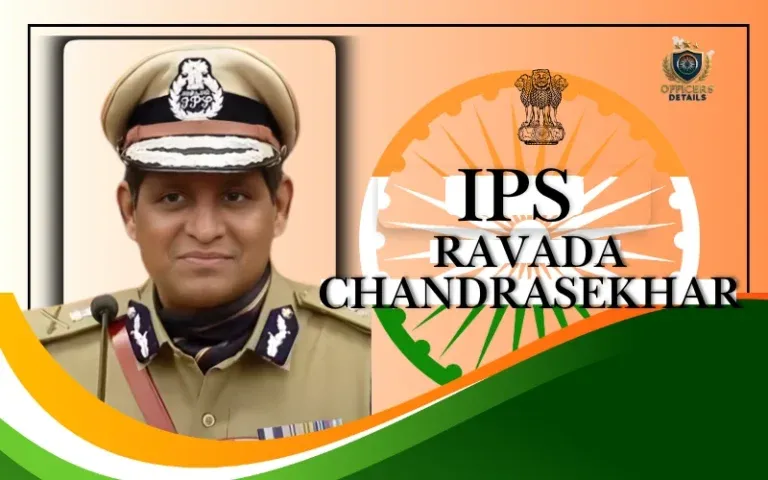
The Chief Secretary is the highest-ranking civil servant in any Indian state and serves as the administrative head of the entire state government. If you enjoy reading about prestigious government posts and senior IAS officers, you can also explore officersdetails.com for detailed articles covering administrative services, constitutional roles, and important government positions in India.
Many people preparing for UPSC or State PCS examinations hear about the Chief Secretary, but only a few understand how much responsibility comes with this office. The position is not simply about seniority. It requires decades of administrative experience, sound judgment, leadership skills, and the ability to coordinate almost every major department within the state government. Every important administrative decision eventually reaches the highest bureaucratic office before moving toward implementation.
A Chief Secretary works behind the scenes most of the time, yet the influence of this office reaches every district, department, and government institution within the state. Whether it involves education, healthcare, infrastructure, agriculture, finance, law and order, disaster management, or policy implementation, the Chief Secretary plays a significant coordinating role.
Understanding The Chief Secretary Position
The Chief Secretary is generally the senior-most Indian Administrative Service officer serving in a state government. The officer functions as the administrative head of the state secretariat and acts as the principal adviser to the Chief Minister on administrative matters.
Although ministers take political decisions, the Chief Secretary ensures those decisions are converted into effective administrative action. This balance between policy and implementation makes the office extremely important.
Every state appoints only one Chief Secretary at a time, making it one of the most prestigious assignments available to an IAS officer.
Journey Towards The Top
Reaching the post of Chief Secretary is the result of decades of public service rather than a single promotion.
The officer begins by clearing the UPSC Civil Services Examination and joining the Indian Administrative Service. After completing professional training, several field assignments follow. These include positions like Sub-Divisional Magistrate, District Magistrate, Divisional Commissioner, Departmental Secretary, Principal Secretary, and Additional Chief Secretary.
Throughout the career, officers handle different departments to gain practical experience in governance, finance, law, development administration, and public policy.
Only officers with outstanding administrative records usually reach the state’s highest bureaucratic office.
Administrative Leadership Across Departments
One of the biggest responsibilities of the Chief Secretary is coordinating all government departments.
Every department has its own secretary, staff, and administrative system. However, when policies involve multiple departments, the Chief Secretary ensures smooth coordination among them.
Health may require support from finance. Education projects may involve public works departments. Agricultural reforms may need cooperation from irrigation, revenue, and rural development departments.
The Chief Secretary brings these departments together so government work progresses efficiently.
Principal Adviser To The Chief Minister
The Chief Minister depends upon accurate administrative advice before major decisions are taken.
The Chief Secretary provides factual information, legal opinions, implementation reports, and administrative recommendations without political bias.
Since the officer has decades of experience, practical suggestions often help improve policy execution.
Professional neutrality remains one of the strongest qualities expected from the office.
State Administration Supervision
The Chief Secretary regularly reviews the functioning of various government departments.
Meetings are conducted with senior secretaries, commissioners, departmental heads, and district authorities to monitor development work.
Progress reports, budget utilization, project implementation, administrative reforms, recruitment matters, and public welfare schemes are discussed frequently.
Whenever delays occur, corrective measures are suggested to improve administrative efficiency.
Coordination With District Administration
Although District Magistrates independently manage their districts, overall supervision remains connected with the state administration.
The Chief Secretary regularly communicates with divisional commissioners and district collectors regarding government priorities.
Large infrastructure projects, welfare schemes, disaster management activities, and public service delivery often require direct coordination between state headquarters and district administrations.
This continuous communication strengthens governance across the state.
Role During Emergencies
Natural disasters demand immediate administrative coordination.
Floods, earthquakes, droughts, cyclones, industrial accidents, epidemics, and public emergencies require quick decisions involving multiple government departments.
The Chief Secretary coordinates with disaster management authorities, health departments, police, public works, transport officials, municipal bodies, electricity boards, and district administrations.
Timely coordination often reduces the overall impact of emergencies.
Administrative preparedness remains essential throughout the year.
Financial Administration Responsibilities
Government development depends upon effective financial management.
The Chief Secretary reviews expenditure patterns, monitors implementation of budget allocations, and ensures departments follow financial rules.
Although the Finance Department manages financial matters directly, coordination at the highest administrative level helps maintain discipline across government institutions.
Responsible financial administration improves public trust and project efficiency.
Policy Implementation Across The State
Creating policies is only the beginning.
Real success depends upon proper implementation.
The Chief Secretary monitors whether government decisions are reaching citizens through effective administrative systems.
Road projects, hospitals, schools, welfare programs, digital governance initiatives, agricultural assistance, employment schemes, and public infrastructure require continuous monitoring.
Administrative reviews help identify delays before they become major problems.
Relationship With Central Government
The Chief Secretary also represents the state administration during communication with the Union Government.
Many centrally sponsored schemes require close coordination between central ministries and state governments.
Meetings, official reports, funding proposals, policy discussions, and administrative reviews frequently involve the Chief Secretary.
Strong coordination improves implementation of national development programs within the state.
Leadership Within The Secretariat
A state secretariat contains numerous departments working simultaneously.
The Chief Secretary promotes coordination, transparency, accountability, and efficient decision-making among senior officers.
Leadership here depends more upon consultation and administrative experience than exercising authority alone.
Good communication creates better governance.
Experienced officers understand that cooperation often produces better results than rigid administration.
Qualities Of An Effective Chief Secretary
Academic knowledge alone cannot prepare someone for this office.
The position requires leadership, patience, honesty, constitutional understanding, communication skills, crisis management ability, negotiation capability, administrative discipline, and emotional maturity.
Listening carefully before making decisions often becomes as important as taking action.
Balanced judgment remains one of the defining characteristics of successful senior administrators.
Challenges Of The Position
Every day presents different administrative challenges.
Public expectations continue increasing while financial resources remain limited.
Departments may have different priorities.
Unexpected disasters demand immediate attention.
Legal requirements must always be respected.
Technology is changing governance rapidly.
The Chief Secretary must balance efficiency, transparency, accountability, and public welfare simultaneously.
Handling these responsibilities requires calm decision-making under pressure.
Why The Office Commands Respect
The Chief Secretary represents the highest level of professional achievement within the state bureaucracy.
Unlike positions focused on one department, this office oversees coordination across the entire government.
The role combines leadership, administrative experience, constitutional responsibility, and practical governance.
Although citizens may rarely interact directly with the Chief Secretary, the quality of state administration often reflects the effectiveness of this office.
Efficient governance benefits millions of people every single day.
Interesting Facts About The Chief Secretary
Every state has only one Chief Secretary serving at a time.
The position is generally held by one of the most senior IAS officers in the cadre.
The Chief Secretary chairs numerous high-level administrative meetings every week.
Major development projects frequently undergo review at this level before implementation.
The office works closely with the Chief Minister, cabinet ministers, district administrations, constitutional authorities, and central government institutions.
The workload remains demanding throughout the year because state administration functions continuously without interruption.
Conclusion
The Chief Secretary is much more than the senior-most IAS officer of a state. The office serves as the administrative backbone of state governance by ensuring coordination, accountability, and effective implementation of government policies. From supervising departments and guiding district administrations to managing emergencies and supporting the Chief Minister with professional advice, the Chief Secretary plays an essential role in maintaining efficient governance. Understanding this prestigious position provides valuable insight into how state governments function beyond the political leadership.
If you want to learn more about IAS officers, administrative posts, constitutional authorities, and the structure of Indian governance, continue exploring well-researched guides that explain these important positions in a simple and practical way.
Read also:-